Back to Blog
Workforce Tracking 30 May 2026 By Onzup Team

Time Tracking vs Employee Monitoring: What Growing Teams Actually Need

Understand the difference between time tracking and employee monitoring, and when teams need active-time, idle-time, screenshot, app usage, and reporting context.

Employee Time Tracking And Monitoring Software Employee Activity Tracking Productivity Tracking Time Tracking
Time Tracking vs Employee Monitoring: What Growing Teams Actually Need

Time tracking and employee monitoring are often discussed as if they solve the same problem. They do not.

Time tracking answers when work was recorded. Employee monitoring adds context around what happened during that time.

What time tracking does well

Time tracking is useful for attendance, billing, shift records, and basic hour summaries. It helps teams confirm that work time was logged and gives finance or operations a simple record to review.

But time tracking alone usually cannot explain idle time, app usage, website activity, screenshots, or productivity patterns.

What employee monitoring adds

Employee monitoring adds the operational context managers need for reviews:

  • Active, idle, away, and offline status
  • App and website usage
  • Screenshot evidence
  • Team productivity reports
  • Alerts and exception signals
  • Export-ready reporting

This context is especially useful for remote, hybrid, branch, and service teams where managers cannot rely on floor visibility.

When teams need both

If the business only needs attendance, time tracking may be enough. If managers need to understand productivity, tool usage, policy issues, or work proof, they need monitoring data alongside time records.

Onzup EPS is built for teams that need employee time tracking and monitoring software with stronger activity context, not just clock-in and clock-out data.
Onzup Team avatar

Author bio

Onzup Team

Editorial Team

Onzup writes from the perspective of product, operations, and implementation teams that work on productivity visibility, reporting, and governance across office, remote, and branch environments.

View author profile

Last updated 30 May 2026

Implementation notes

How this article was shaped

  • Tie every claim to a real product capability or a documented workflow pattern.
  • Use role, industry, and location context to avoid generic templated copy.
  • Prefer concrete examples, reporting outputs, and rollout notes over abstract promises.

Methodology

Editorial methodology

Each article should connect a search query to a real operating question, then answer it with product-aligned language, implementation guidance, and practical examples.

The goal is to help readers understand not just what EPS does, but how the software fits into a review rhythm, policy framework, or reporting workflow.

Workflow examples

Practical workflow examples

01

Weekly manager review

Review trend changes, outliers, and follow-up actions in a predictable cadence.

02

Role-based coaching

Use objective signals to guide conversations with managers, leads, or branch owners.

03

Leadership summary

Convert raw activity data into concise, decision-ready reporting for leadership review.

Screenshot evidence

Relevant EPS screenshots

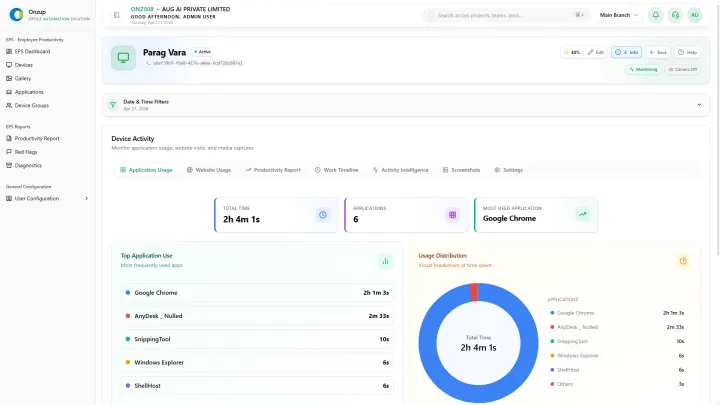
Onzup EPS dashboard preview
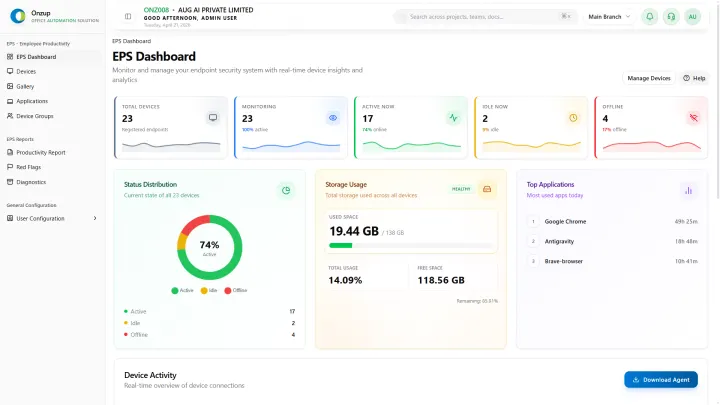
Dashboard views make it easier to review activity, alerts, and productivity signals in one place.
Onzup EPS app usage preview
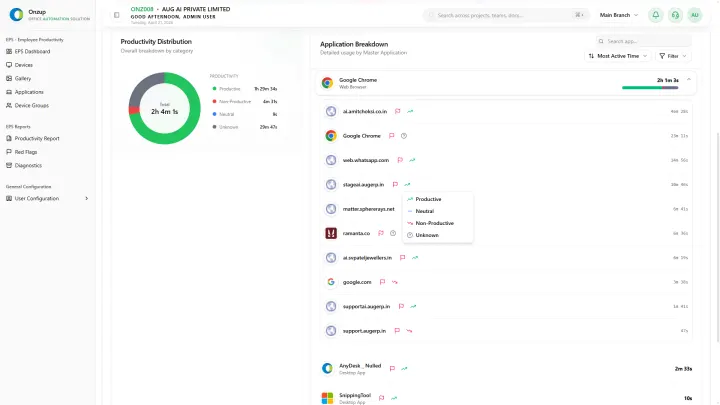
Usage context helps managers understand what work tools are actually being used during work hours.
Onzup EPS productivity report preview
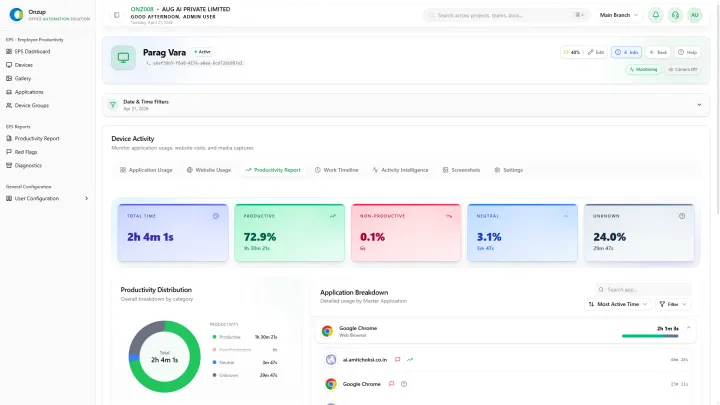
Export-ready reports support weekly review and governance conversations.

Customer proof

Customer proof and operational value

Weekly review cadence

1 dashboard

Managers can review productivity patterns without manually stitching together reports.

Operational context

Activity + screenshots

Reporting becomes easier to interpret when proof and trend data sit together.

Governance readiness

Exportable outputs

Leadership can use the same data for review, coaching, and escalation conversations.

FAQ

Questions readers ask before they convert

Q How does Onzup handle time tracking vs employee monitoring: what growing teams actually need?

The content should explain the topic through actual product workflows, not generic promises or empty category claims.

Q Can this support weekly reviews and escalation?

Yes. The pages should connect the product to reporting, review cadence, and action-oriented workflows.

Continue researching practical EPS topics.

Employee Performance Management with Activity Data
Performance Management 30 May 2026

Employee Performance Management with Activity Data

See how activity signals, productivity trends, idle-time data, screenshots, and reports can support fairer employee performance management conversations.

Employee Performance Management System Employee Performance Tracking Software Productivity Tracking
By Onzup Team Read article
Back to top
WhatsApp chat